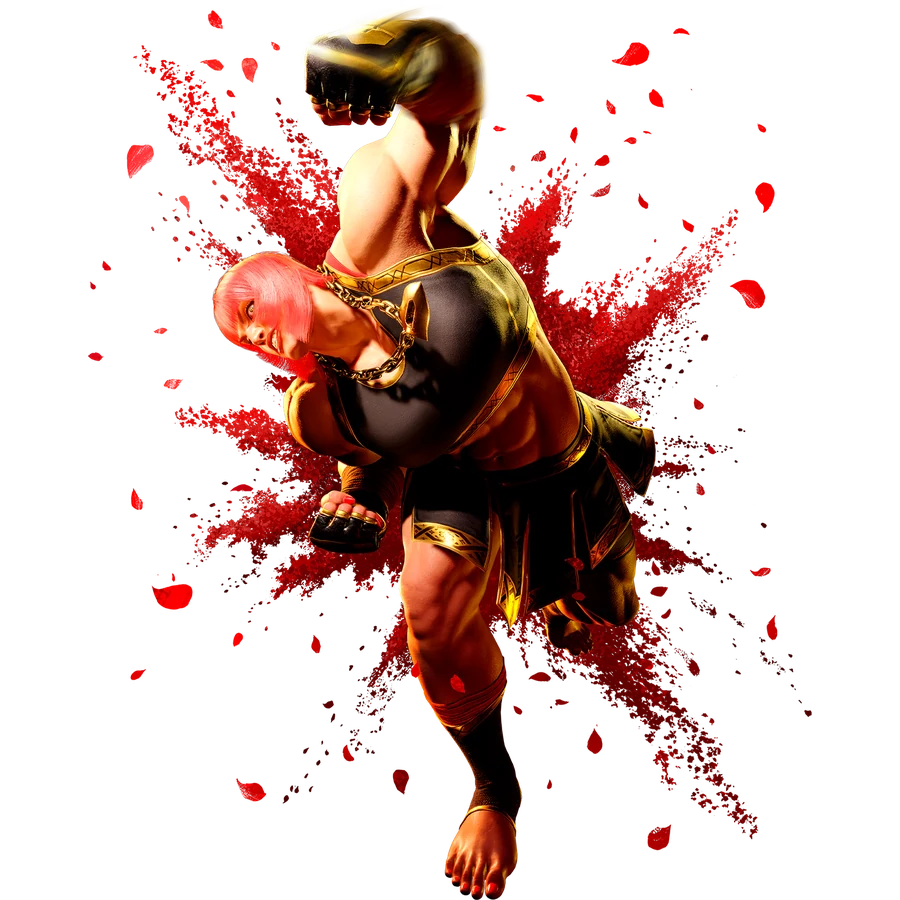
Identify the charged attack and the knockdown it creates
Marisa makes a wrong challenge expensive. Her attack strength, charge, and combo ender matter more than the apparent size of the animation. Defend the move you actually saw, then distinguish a spaced attack from the prepared strike-or-Enfold decision after a knockdown.
What to watch for
Charged and ordinary Gladius
The frame list gives these separate entries. A response checked against a released punch does not establish an answer to the held version. Keep the charge state in any recording used to test your interruption.
Dimachaerus strength changes the next attack
The setplay source follows the light ending with a whiffed light attack into forward heavy kick or Enfold, while the medium ending supports a Drive Rush approach. A timing learned against one is not a shortcut through the other.
How to deal with common situations
A jump follows Phalanx
The combo guide records a safe-jump route after this ender. Reproduce its full combo before judging a reversal. Marisa can continue with a strike or Enfold after the jump is defended; blocking the jump is only the first decision.
The heavy kick seems different after a knockdown
The notes deliberately use a whiffed attack to time forward heavy kick later in its active period. Do not apply a neutral-contact result to that setup. Compare where in the animation contact occurs before deciding to jab.
Distance-specific responses
Outside her contact range
Observe whether Marisa releases Gladius or keeps holding it. Test the reach of the version you are trying to punish rather than running in because the initial wind-up looked slow.
At a blocked attack
Use the exact move and charge row to shortlist responses. A large pushback can make a nominally quick starter miss; begin with a reaching option and verify it against recovery into guard.
Under wake-up pressure
Name light Dimachaerus, medium Dimachaerus, or Phalanx first. Those endings prepare different timings and approaches, even if the final choice looks like the same heavy kick or grab.
Common mistakes
- Treating charged Gladius as its uncharged version.
- Pressing after a timed heavy kick based on a neutral frame check.
- Assuming every post-Phalanx jump loses to a reversal.
Training mode practice steps
Use your own character as the defender. Turn on the frame meter and input history so you can distinguish a real answer from a mistimed recording.
Compare the two Gladius recordings
Record released and charged Gladius at the spacing that caused trouble. Add guard after each. Test your response and check whether it reaches, interrupts, or actually punishes; do not combine these outcomes.
Rebuild the light-Dimachaerus decision
Use the light ender and whiffed light attack from the setplay page. Record forward heavy kick and Enfold as alternatives. Verify the timing, then compare guard and throw evasion against both branches.
Uses the separate Gladius variants in Frame Data and Marisa’s Dimachaerus, timed forward-heavy-kick, and Phalanx setplays. Exact advantages remain in the current frame reference. For current numerical values, use the linked Frame Data page and confirm important situations in Training Mode.