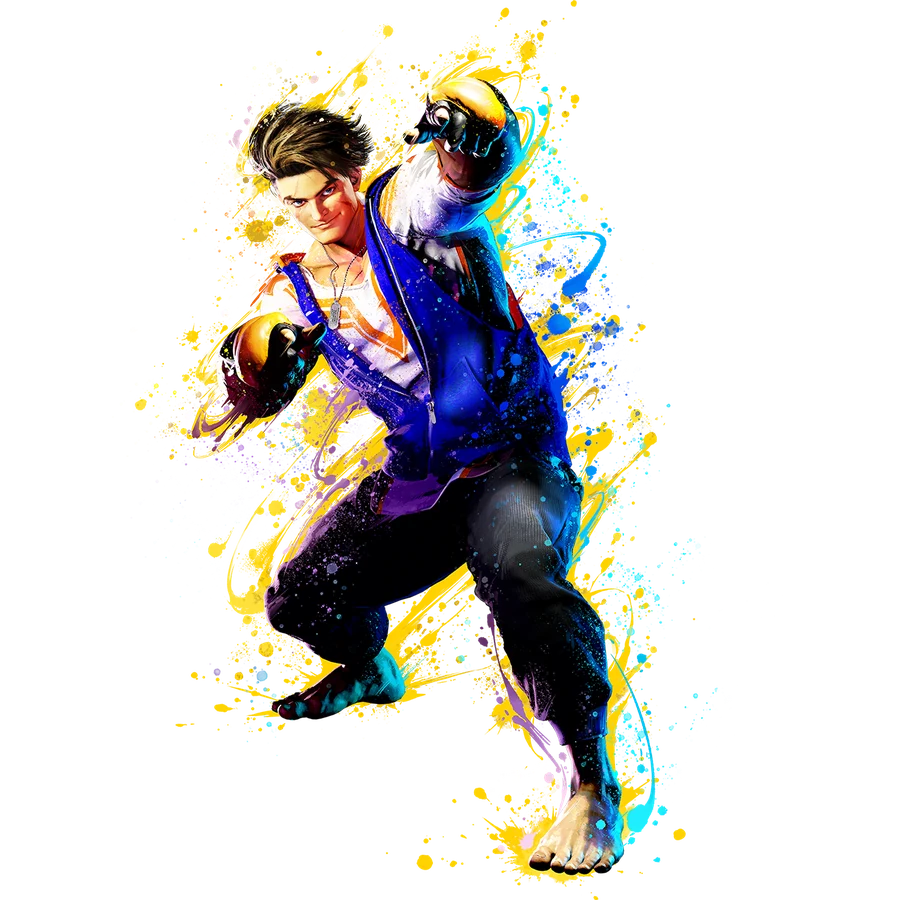
Get past the mid-range check without feeding his next knockdown
Luke combines a ranged check in Sand Blast with a grounded stop in crouching medium punch. The Japanese assessment highlights that normal as a way to hold space and check a rush. If you force your way through on the same timing, Luke can turn the contact into his own Drive Rush offense. Your first task is to identify what is stopping the approach, then prepare for the specific knockdown if he converts.
What to watch for
Sand Blast strength and follow-up
The move has separate light, medium, heavy, and OD entries. OD Sand Blast also has the Fatal Shot follow-up. Do not learn a response from one projectile recording and assume the other versions end at the same time or leave the same situation.
Crouching medium punch and Suppressor
Luke’s published assessment emphasizes Drive Rush crouching medium punch and Drive Rush Suppressor as offensive tools. Recognize whether he is holding ground with a normal or arriving behind Drive Rush. The same-looking button is not a reason to use the same timing in both situations.
The charge on Flash Knuckle
Uncharged, charged, and Perfect versions have separate frame entries. In particular, heavy charged and Perfect Flash Knuckle are advantaged on block in the listed data. A large punch animation does not mean Luke has handed you a guaranteed punish.
How to deal with common situations
Your rush keeps running into crouching medium punch
Stop repeating the same approach from the same starting point. Stand just outside the range you recorded, let Luke show the normal, and test whether your character can punish its recovery. If your attack does not reach or arrives too late, reset the spacing instead of calling the attempt a reliable whiff punish.
Light Flash Knuckle knocks you down
Luke’s setplay guide follows this ender with Drive Rush into throw, crouching medium punch, or a backward-walking shimmy. Prepare for a new defensive choice after the combo rather than assuming the ender creates neutral. Repeated throw-tech attempts are vulnerable to the retreating option; blocking alone leaves the throw available.
You block a Flash Knuckle
Identify its strength and charge state before consulting the punish table. Charged heavy is a pressure situation, not the same recovery as uncharged light. If a version is a punish candidate, record it followed by guard and verify that your chosen starter connects at the actual distance.
Luke throws you in the corner
The published corner-throw setup branches into another forward throw, crouching medium punch, or a shimmy. Track which branch your opponent favors. Change your defensive choice for a reason, rather than trying the same throw-tech timing until it finally works.
Distance-specific responses
At Sand Blast range: identify the version
Move toward a distance where you can threaten Luke, but account for which Sand Blast reaches that position. Practice the strength changes and OD follow-up before turning a projectile read into a jump or rush.
At normal range: stop donating contact
Use short changes in spacing around the crouching-medium-punch range you tested. If Luke switches from waiting to Drive Rush, recognize the change and defend the incoming pressure instead of treating it as another stationary poke.
After a knockdown: watch the ender
Light Flash Knuckle, heavy Rising Uppercut, and forward throw lead to different approaches in Luke’s setplay guide. Record these separately. The first visible forward movement after you rise is not enough to decide whether to throw-tech or challenge.
Common mistakes
- Starting Drive Rush from the same distance and rhythm after Luke has already stopped it with crouching medium punch.
- Treating every Flash Knuckle as the uncharged version and pressing into charged-heavy pressure.
- Forgetting Fatal Shot when testing a response to OD Sand Blast.
- Copying CBT-video numbers or an old knockdown timing without checking the current frame table and the actual setup.
Training mode practice steps
Use your own character as the defender. Turn on the frame meter and input history so you can distinguish a real answer from a mistimed recording.
Build a Sand Blast comparison
Record light, medium, and heavy Sand Blast from one position. Add OD Sand Blast with Fatal Shot in its own slot. First identify where each reaches and when the sequence ends. Then test one approach at a time; keep results for the OD follow-up separate from the ordinary versions.
Test the mid-range stop
Record crouching medium punch followed by guard. Vary your starting distance to find where it misses and whether your chosen response reaches in time. Add a wait slot so you are not simply pressing to a fixed playback rhythm.
Defend the light-Flash-Knuckle setup
Use the light-Flash-Knuckle ender from Luke’s combo guide. Record the Drive Rush throw, crouching-medium-punch attack, and backward-walking shimmy as separate branches. Randomize them after checking the timing. Note whether you lost to a strike, a throw, or your own missed throw-tech attempt.
Based on Iori’s Luke assessment and the published combo guide’s light-Flash-Knuckle, Rising-Uppercut, and corner-throw setups. Move variants use the frame table. The older CBT video is not used as authority for current frame values or setup timing. For current numerical values, use the linked Frame Data page and confirm important situations in Training Mode.