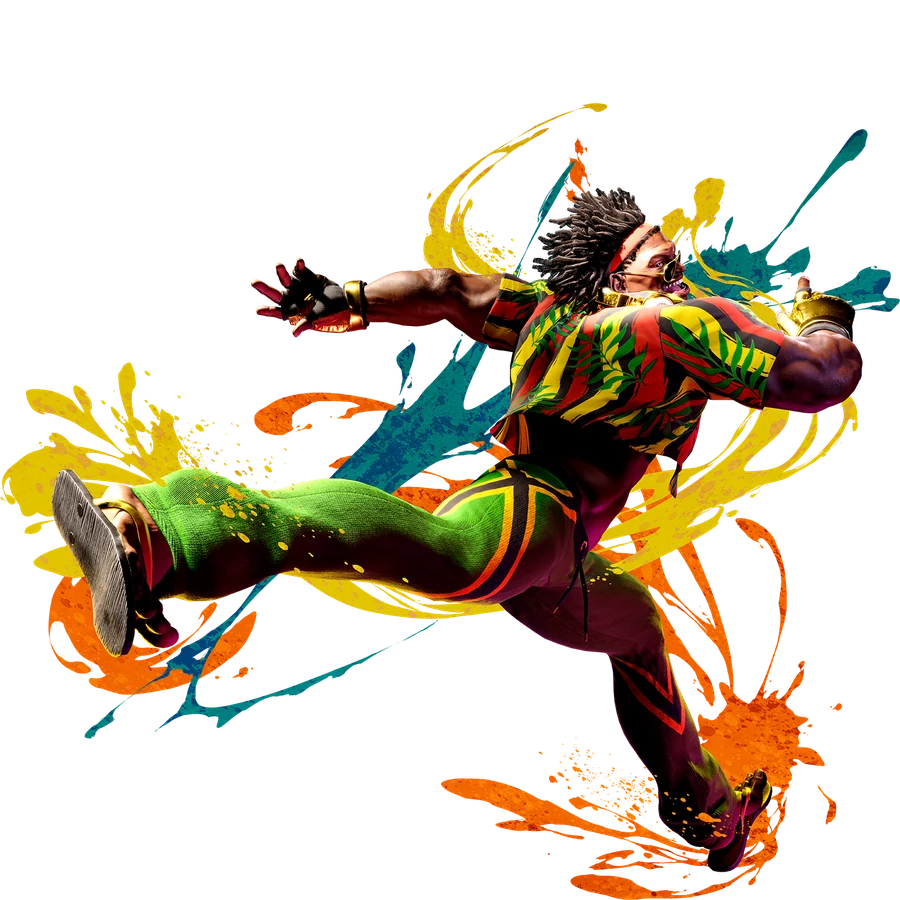
Recognize the knockdown behind the next fast approach
Dee Jay’s movement can make several different setups look like one continuous rush. Start with the ender: the Japanese guide separates a grounded heavy Jackknife Maximum, a corner juggle, and a Sobat knockdown. Knowing that starting point makes the next jump or dash easier to study.
What to watch for
Heavy Jackknife on the ground
The source lists a jump setup or two midscreen dashes into crouching medium punch, throw, shimmy, or Jus Cool. Do not treat the double dash as evidence that Dee Jay has already chosen a throw.
Knee Shot changes the jump timing
A separate corner route uses Knee Shot after a Jackknife juggle. Your anti-air or reversal test must include that airborne action; replacing it with a normal jump kick changes the setup.
How to deal with common situations
A fast approach catches your attempted escape
Recreate the grounded heavy-Jackknife ending before testing your button. Dee Jay’s source includes both a strike and a retreat after the dashes, so a throw-tech that works against the grab can lose to the shimmy.
You mistake a corner juggle for the midscreen setup
The corner medium-to-heavy Jackknife route leads into Knee Shot timing. Keep it in its own recording slot instead of judging every jump by the recovery of a grounded heavy Jackknife.
Distance-specific responses
Before the rush reaches you
Use the starting distance from a replay to practice recognizing Dee Jay’s advance. A fixed playback rhythm can make an intercept look reliable even when you are only anticipating the recording.
After the two dashes
Watch whether he stays close for crouching medium punch or throw, or moves away into a shimmy or Jus Cool. Avoid extending a missed throw-tech into another hurried attack.
At the corner landing
Distinguish Knee Shot from an ordinary jump attack. The route and landing timing are the useful clues, rather than a rule that all of his jumps are safe or unsafe.
Common mistakes
- Practicing the corner juggle with the wrong jump attack.
- Throw-teching every double-dash approach.
- Calling a rhythm-based rush interruption a reaction.
Training mode practice steps
Use your own character as the defender. Turn on the frame meter and input history so you can distinguish a real answer from a mistimed recording.
Randomize the double-dash choices
Record grounded heavy Jackknife into two dashes, then crouching medium punch, throw, and retreat in separate slots. Verify each approach before randomizing. Track attacks and missed throw-techs as different failures.
Compare the jump routes
Create one slot for the grounded heavy-Jackknife jump and another for the corner juggle into Knee Shot. Try your chosen reversal against each verified setup and record which route it actually defeats.
Draws on Dee Jay’s grounded heavy-Jackknife, corner Knee Shot, and midscreen dash setplays. These route-specific tests replace broad claims about his movement speed or universal safe jumps. For current numerical values, use the linked Frame Data page and confirm important situations in Training Mode.