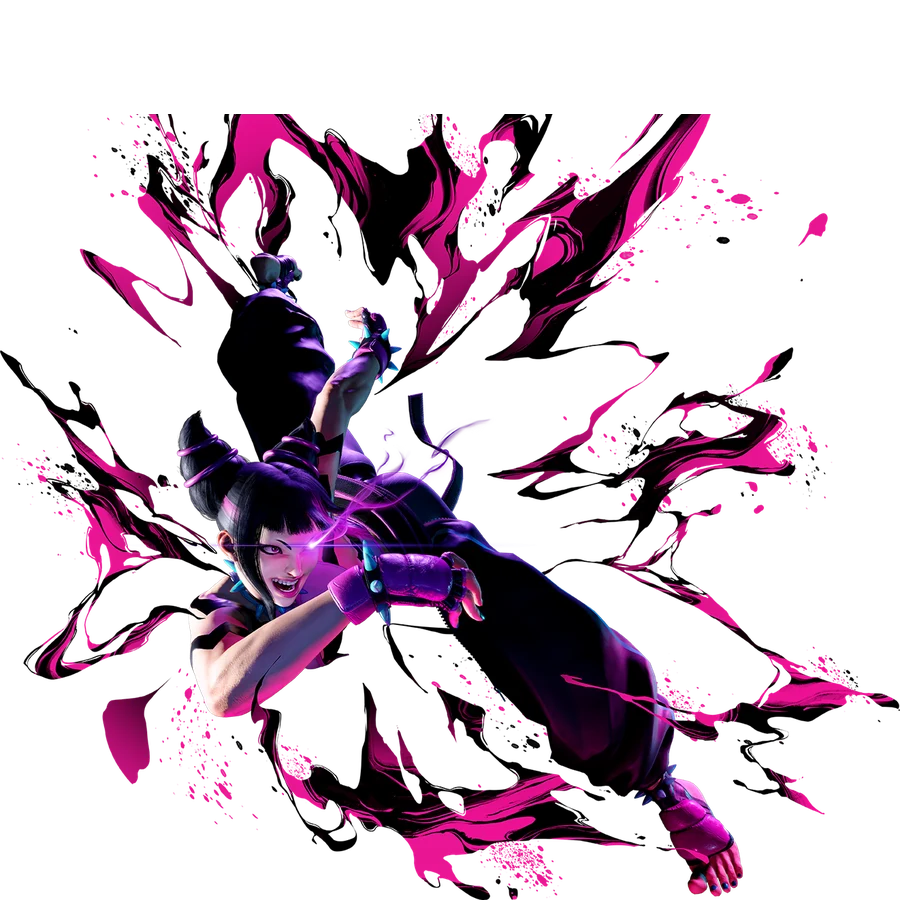
Track Fuha stocks and the sequence they enable
Juri’s pressure is easier to understand when you follow her resources as well as her movement. Fuhajin builds Fuha stocks, while boosted specials can spend those stocks and lead into other specials. A knockdown may let her replenish a stock and prepare another approach. Identify whether she is charging, spending, or advancing before deciding that the sequence has ended.
What to watch for
Fuhajin builds the next exchange
The combo guide uses medium Fuhajin as a knockdown ender and light Fuhajin to replenish stocks when there is space. A stock-building animation after a knockdown is not automatically your chance to attack. Check whether you can actually reach before committing to the attempt.
Boosted specials can have another part
The move notes allow boosted Saihasho, Ankensatsu, and Go Ohsatsu to cancel into different boosted specials when stocks are available. OD versions have their own entries. The recovery of a single recorded special does not describe a sequence that still has a follow-up.
Heavy Tensenrin into corner pressure
Juri’s current setplay notes emphasize standing medium punch after a corner heavy-Tensenrin ender, then throw, another strike, or a shimmy. Midscreen results also depend on hit height and distance. Watch the knockdown context instead of assuming every Tensenrin hit produces the same wake-up timing.
How to deal with common situations
She knocks you down with medium Fuhajin
The listed follow-up is a dash into standing medium punch, crouching medium punch, throw, or a retreat. Notice that she has gained a stock while setting up another decision. Defend the actual next branch; chasing the stock gain with an automatic button can run into the strike she prepared.
You block a special and get hit trying to punish
Review the stock state, whether the move was boosted or OD, and whether another special followed it. Build the full sequence in Training Mode. Only test a recovery punish once you know where that recording ends. A negative number in the table is not evidence that the opponent must stop at that point.
Go Ohsatsu ends the combo and she charges again
The combo guide pairs this ender with light Fuhajin to replenish a stock, then a renewed advance. Watch the resulting distance and her movement. Record both the charge and the approach; removing the charge from your recording changes the timing you were trying to understand.
Distance-specific responses
Outside contact: watch the stock change
Notice when Juri uses the space to replenish Fuha stocks. Move toward a useful position when the situation allows, but do not call a distant charge punishable without testing your reach. Arriving after she recovers simply gives her an attack to defend against.
At low-kick range: recognize the Rush entry
The Japanese combo introduction includes crouching medium kick into cancel Drive Rush as an important route. Keep low guard available during your approach and distinguish that contact into Rush from a stock-building Fuhajin. They begin different sequences even if both eventually put Juri close.
In the corner: name the ender first
Heavy Tensenrin into standing medium punch and forward throw into dash are separate entries in the setplay guide. Match the actual route before choosing a wake-up timing. Do not import the older medium-Fuhajin frame-kill setup as a guaranteed current sequence; the source itself marks it for retesting.
Common mistakes
- Watching Juri’s Drive gauge while overlooking the Fuha stocks that permit another special in the sequence.
- Practicing against an isolated boosted special with no follow-up, then using the result against a stocked sequence.
- Rushing at a distant light Fuhajin without checking whether the punish can reach before she recovers.
- Applying one corner wake-up timing to medium Fuhajin, heavy Tensenrin, and forward throw.
Training mode practice steps
Use your own character as the defender. Turn on the frame meter and input history so you can distinguish a real answer from a mistimed recording.
Compare the same special with and without a follow-up
Choose a Saihasho sequence from a replay. Record the isolated move, then a legal stocked follow-up using the move list’s conditions. Watch the stock display during playback. Test your intended response against both recordings and note whether it punishes recovery or gets interrupted by the continuation.
Defend the stock-building knockdown
Use medium Fuhajin as the ender, then record dash into standing medium punch, throw, and backward-walking shimmy. Check the strike timing before randomizing. Keep the stock state visible so you connect the knockdown you just took with the resource available in the next exchange.
Recreate the corner Tensenrin route
Copy the actual combo that ends in heavy Tensenrin, including its hit height, then record standing medium punch into strike, throw, or retreat. Confirm the first attack’s timing with the frame meter. Change the ender’s distance afterward to learn which parts of your result depend on the original setup.
Juri’s resource cycle and knockdown examples use the existing Japanese combo guide. Stock-dependent special continuations are grounded in the official-reference move notes. Setups the source labels as older or timing-sensitive are not promoted to confirmed current sequences. For current numerical values, use the linked Frame Data page and confirm important situations in Training Mode.